Design · 3 min read
Vegan, vegetarian, spicy – clearly labeled.
Many guests look for dishes that fit how they eat. Clear labels save questions and build trust.
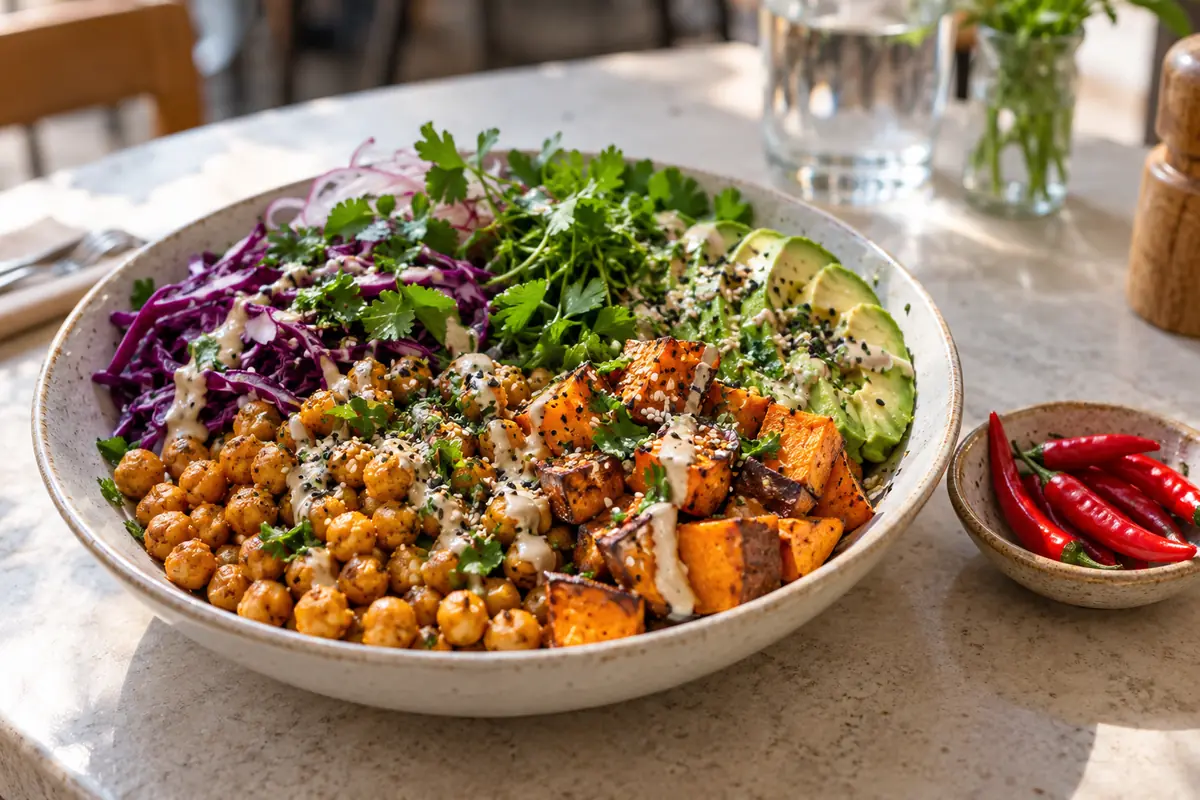
Vegan means no animal ingredients
Label a dish vegan only if every ingredient is free of animal products – including stock, sauces and dressings. Common pitfalls are butter, honey, fish sauce, gelatin, egg in pasta and milk ingredients in store-bought products.
Vegetarian and spice levels
Besides “vegan”, Plateclick has “vegetarian” and “spicy” labels. Guests can show only vegetarian or vegan dishes or hide spicy ones; vegan dishes count as vegetarian too. You can describe how hot a dish is in its description, for example “with fresh chili”.
Vegan is not allergen-free
Vegan dishes can contain allergens such as soy, wheat, sesame or tree nuts. Allergen information applies regardless of the vegan label.
Be honest about cross-contact
If vegan and non-vegan food share surfaces or a fryer, say so when guests ask. For some guests that matters.
Clear descriptions
- Name plant-based swaps, for example “with oat milk” or “with tofu”.
- Vague words like “light” or “healthy” don't replace a clear label.
- When a recipe changes, check the label and the allergens together.