Labeling · 6 min read
How to label allergens on your menu.
Guests with food allergies need reliable information before they order. Here is which allergens matter, which rules can apply to restaurants and how to show allergens on a menu so guests find them at a glance.
The nine major food allergens
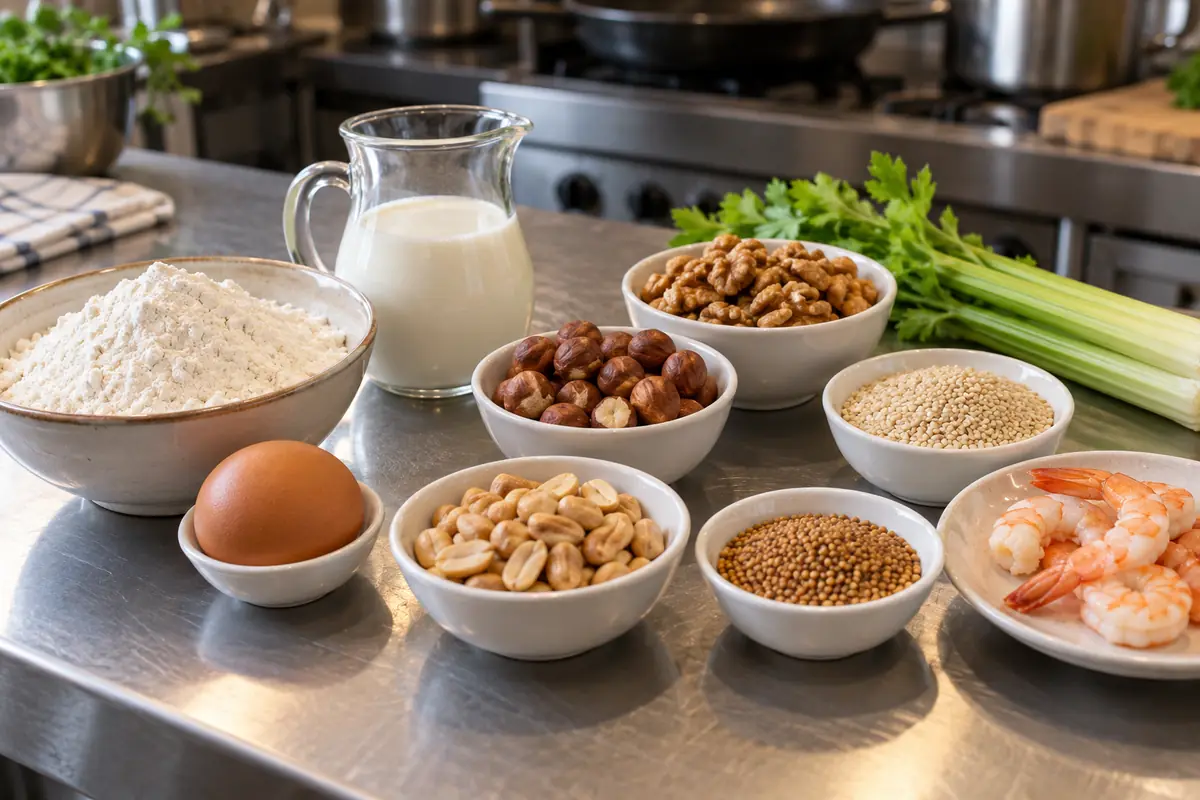
The FDA recognizes nine major food allergens. Sesame was added by the FASTER Act and has been a major food allergen since January 1, 2023.
- Milk, eggs, fish, crustacean shellfish
- Tree nuts, peanuts
- Wheat, soybeans, sesame
Do restaurants have to label allergens on the menu?
Federal allergen labeling rules for packaged foods do not generally cover restaurant menus. Restaurants follow their state and local food codes, and many of those are based on the FDA Food Code.
The 2022 FDA Food Code added a new rule (§ 3-602.12(C)): the permit holder notifies consumers in writing when a major food allergen is an ingredient in unpackaged food they serve. According to the Food Code, that written notice can be a menu notification, a brochure, a table tent, a placard, an electronic means or another effective written form.
The Food Code is a model, not federal law. It applies where your state or local health department has adopted it, and some states and cities also have their own restaurant allergen rules. Ask your local health department which version applies to you.
Three ways to show allergens on a menu
Whatever you choose, use the same method throughout the menu so guests do not have to guess.
- Spelled out under each dish: “Contains: milk, wheat, egg.” This is the clearest option and works for every guest.
- Letters or icons next to each dish, with a key on every page or screen that explains them.
- A separate allergen chart that lists every dish and its allergens, for example for your staff or for guests who ask.
Example allergen labels
Name allergens in plain words and include hidden sources such as sauces, dressings and marinades. These are made-up examples:
- Margherita pizza – Contains: wheat, milk
- Pad thai – Contains: peanuts, egg, soy, fish (in the fish sauce)
- House salad with walnuts – Contains: tree nuts (walnuts), milk (in the dressing)
How to inform guests
- List the major allergens for each dish directly on the menu.
- Ask guests to tell their server about food allergies before ordering.
- Train staff so allergen questions get a reliable answer from the kitchen.
- Keep recipes and supplier ingredient labels on file, including sauces and dressings.
- Update the menu the same day a recipe or supplier changes.
Is a QR code menu enough?
That depends on your health department. The Illinois Department of Public Health, for example, accepts a QR code as written notification and suggests offering a printed copy to guests who ask. Keep a printed allergen list on hand either way – not every guest uses a phone.
Cross-contact
If dishes share fryers, grills or prep surfaces, an allergen-free recipe can still carry traces. Be honest about it when guests ask.
How Plateclick helps
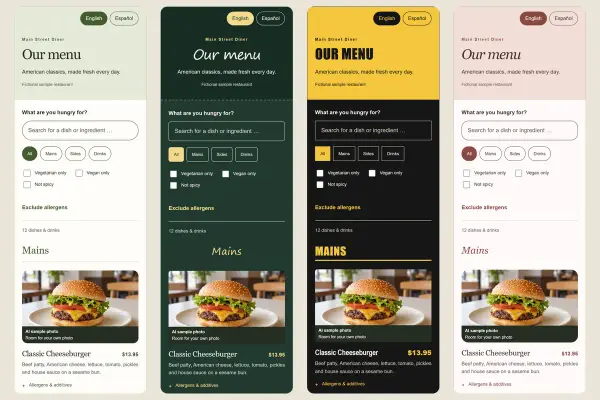
In the workshop you select each dish's allergens from a list that covers the nine major allergens plus others such as celery, mustard, lupin, sulfites and mollusks. Guests see them spelled out with the dish and can hide dishes with the allergens they select. Before you publish, you confirm that you have checked the information – Plateclick never fills it in or guesses.
Under “Share & QR” you can print an allergen list of all dishes for your staff or for guests who ask, always from the published menu.
Menu labeling law: calories
“Menu labeling” in the US usually means the FDA rule on calories, which covers chains with 20 or more locations. It is separate from allergen notices.